 The British Geophysical Association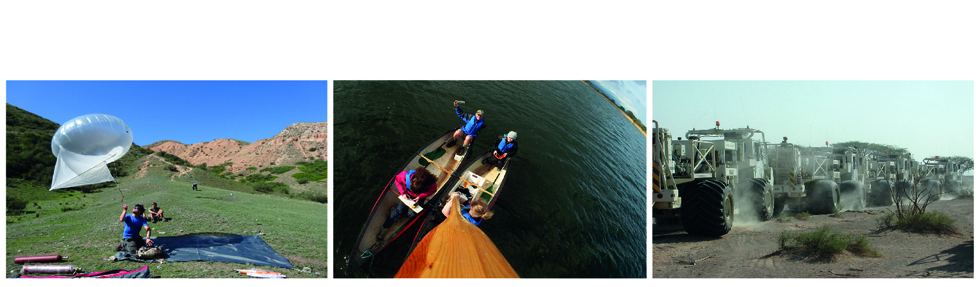
Bullerwell Lecturer 2026
The British Geophysical Association is delighted to announce that the Bullerwell Lecturer for 2026 will be Dr. Ualisson Donardelli Bellon from the University of Edinburgh.
Dr Ualisson Donardelli Bellon is a Postdoctoral Research Associate in Mineral Magnetism at the School of GeoSciences, University of Edinburgh. His research investigates magnetic phenomena at the nanoscale to better understand the stability and evolution of planetary magnetic fields, combining micromagnetic modelling with advanced imaging and chemical analyses, including synchrotron-based techniques.
Dr Bellon holds a PhD in Geophysics (University of São Paulo, 2024), an MSc in Geophysics (University of São Paulo, 2021), and a BSc in Geology (Federal University of Espírito Santo, 2018). His doctoral research focused on studying vortex-state magnetic minerals in carbonate rocks through magnetic mineralogy, synchrotron imaging, and numerical modelling. His academic background spans experimental and computational approaches to mineral magnetism, with applications in palaeomagnetism and planetary evolution.
Dr. Bellon has also won a prize for the Best Geosciences Thesis in Brazil in 2025. He has published in leading journals such as Geophysical Research Letters, Journal of Geophysical Research: Solid Earth, Communications Earth & Environment, and Proceedings at National Academy of Sciences (PNAS). Further information, and publication references, are available at: https://www.research.ed.ac.uk/en/persons/ualisson-donardelli-bellon/
The title of his Bullerwell lecture is:
“From microscopic minerals to planetary magnetic fields”
As part of the award, The British Geophysical Association has funds to cover the associated expenses for a number of these lectures.
If you would like the Bullerwell Lecture to be given at your institution, please contact Ualisson directly, cc the BGA President.
2024 BGA Image Competition
The British Geophysical Association is delighted to announce that the winners of the 2024 BGA image competition are:
1st: Steve Hicks for his “Taylor Tremors” image .
2nd: Phil Mollicone for the “Jug hustlers, Yukon Delta seismic crew” image.
The 2025 BGA image competition is open. Enter the BGA Image Competition and help promote UK geophysics.
First and second prizes are £250 and £100, respectively.
We are looking for dramatic geophysical fieldwork photos, spectacular images of numerical simulations, stimulating photos of laboratory experiments in progress, or even geophysical data overlays or drapes on topography or other surfaces, for example. In fact, any image with a clear geophysical context is welcome. However, generic landscape photos are not eligible — the geophysical link must be obvious within the image itself.
Images must be high-resolution and sent in JPEG or JPG format. Only e-mail entries are eligible.
Entrants must be associated with a UK institution or live in the UK. By entering, you consent to the BGA using their image for promotional purposes, free of charge.
Please email your image to the Competitions Officer with “BGA image competition 2025” in the subject line. Include a brief description of the image and its geophysical relevance.
CLOSING DATE: The competition closes at midnight UTC on 30 September 2025 and judging will be carried out by the BGA Committee shortly after.
UKI-Array
Recently, NERC funded a new seismological equipment pool for use on land, consisting of 3-component Smart Solos and 1-component nodes. This will be held in Cambridge, care of Nick Rawlinson, and will be available for use by our community. We (below) contacted a number of other people who own seismological equipment and constructed an initial inventory of instruments held in the UK and Ireland. To demonstrate and explore the power of seismology, it would be great to put all of this excellent and diverse equipment to good, local use.
Inspired by the vision of the British Geophysical Association, to bring our community together for greater purpose, we would therefore like to suggest that a suitable target for integrated study using all of the instruments in a single array, might be the subsurface of the UK and Ireland. As food for thought, we constructed a survey design that distributes the equipment inventory across this geographical area as evenly as possible.
Both the equipment inventory, and the array design, are available in a green paper.
The green paper is offered only as a stimulus to start a discussion about this possibility across our Geophysical community: to generate ideas for possible sub-targets for detailed study, and to articulate possible motivations and justifications. For example, non-seismological equipment and objectives could be added, specific important subsurface targets might become areas of focus, and new applications would provide additional inspiration.
In the spirit of openness, we therefore invite the community to co-create this document using the link above, by contributing ideas to the section at the end of the green paper and adding your interest to any existing ideas, so that we can all consider and discuss them. Please also forward this email to any colleagues or collaborators who might be interested, but who may not be signed up to this mailing list.
A discussion meeting will be held at the Royal Astronomical Society, London on 10 October 2025 (hybrid, live-stream option available) at which we propose to discuss all options, and hopefully narrow down to a community-driven plan and proposal.
Bullerwell Lecturer 2025
The British Geophysical Association is delighted to announce that the Bullerwell Lecturer for 2025 will be Dr. Susanna Ebmeier from the University of Leeds.
Dr. Susanna Ebmeier completed her BSc. Hons. in Geophysics at the University of Edinburgh in 2008, and her D. Phil. from Oxford in 2012. She then worked at the University of Bristol, and the University of Leeds where she has been a Leverhulme Fellow and is now a NERC Independent Research Fellow.
Susanna is at the forefront of satellite monitoring of volcanoes, working to understand volcanic systems and mitigate their hazard. She has pioneered the analysis of deformation signals from entire magmatic provinces, revealing previously hidden connectivity (Ebmeier et al. 2018), and shown that lava dome volume can be estimated from radar amplitude (Dualeh et al. 2023). Through COMET, she leads training sessions on geodetic monitoring and has run capacity building workshops in Ecuador and Costa Rica volcano observatories. Susanna also created the COMET Volcano Deformation Portal, which allows non-specialist volcanologists to interact with automatically-processed geodetic data, and to assess whether ground movement signals relate to unrest. Susanna is international co-lead of the Committee for Earth Observation Satellites Volcano Demonstrator, coordinating satellite tasking with space agencies and satellite companies on behalf of volcanologists worldwide. She is an enthusiastic teacher, has supervised >13 PhD researchers and 2 postdoctoral associates, and supports open access science. She is Associate Editor for Volcanica and J. Geophys. Res. Further information, and references, are available at: https://environment.leeds.ac.uk/see/staff/1246/dr-susanna-ebmeier
The title of his Bullerwell lecture is:
“Satellite monitoring of volcanic unrest and eruption”
Who wants to be a geophysicist?
Members of the BGA committee (Jenny Jenkins, Amy Gilligan and Lidong Bie) published an Astronomy & Geophysics paper with an initial analysis of the results from the BGA Geophysics questionnaire. The paper focusses on three questions: Why aren’t students signing up to study geophysics? Are they unaware of how in-demand it is? Or are they just too cool for geophysics school?
2024 Gray-Milne travel bursary for PhD students
The British Geophysical Association (BGA) invites applications for a travel bursary supported by the Gray-Milne Trust. The bursary will provide funding up to a value of £500 to support geophysics-related work, training, and travel.
Application closing date: 16 September 2024 at midnight UTC.
The electronic application form can be found here: https://forms.gle/bUbbvV6tzBH34Fxo9
And please also complete the EDI form: https://forms.gle/eVk4AcTD8AHjwLcXA
Eligibility:
- Must spend the money prior to your PhD thesis submission deadline.
- Must already be enrolled on a PhD course at a UK university.
- We welcome applications from students funded by any means.
- Successful applications will be required to provide a short report to the BGA on their work and how the funds have helped.
- The supported work should be completed by December 2025.
- Fieldwork and travel must comply with university guidance, including any risk assessments.
If you have any questions, please contact the BGA Competitions Officer
Royal Astronomical Society 2024 award winners
Congratulations to the past and present BGA committee members on their 2024 Royal Astronomical Society awards.
The 2024 RAS Gold Medal, the Society’s highest honour, has been awarded to Professor John-Michael Kendall (University of Oxford).
Professor Kendall was awarded the Gold Medal for his outstanding contributions in the field of solid Earth geophysics. Using seismology, he has made important contributions across academia and industry, from the deep Earth to volcanoes, and from ice sheets to the energy transition. One of his biggest contributions has been through supporting geophysics more widely, where he has taken on a number of leadership roles and has supported the next generation of seismologists by advising and supporting more than 70 PhD students and Postdoctoral Research Associates.
The 2024 Price Medal is awarded to Professor Christopher Davies (University of Leeds).
Professor Christopher Davies is awarded the Price Medal for a series of investigations modelling the fluid dynamics and material properties of the Earth’s core. This work has helped understand the thermochemical evolution of the Earth and importantly, how the Earth can sustain a geomagnetic field.
The 2024 Higher Education Award is awarded to Dr David Cornwell (University of Aberdeen)
Dr David Cornwell has made an outstanding and sustained contribution to undergraduate and postgraduate geophysics teaching over a number of years. In particular, he has used his knowledge as a mental health first aider to provide individual support and mentoring to many students, supporting their personal wellbeing, and stressing the importance of that wellbeing to their professional success.
Bullerwell Lecturer 2024
The British Geophysical Association is delighted to announce that the Bullerwell Lecturer for 2024 will be Dr. Iraklis Giannakis from the University of Aberdeen.
Iraklis completed his PhD in 2015 on numerical modelling of ground penetrating radar for landmine detection at the University of Edinburgh. This was followed by postdoctoral research positions at Delft University of Technology, the University of Edinburgh, and the University of West London, before moving to the University of Aberdeen in 2020.The main focus of his research is using innovative artificial intelligence concepts, signal processing and inversion to solve problems in applied geophysics and non-destructive testing. His research extends across a wide range of disciplines and has focused on topics with high societal value such as landmine detection, marine geophysics and forestry applications.
The title of his Bullerwell lecture is:
“Exploring the far side of the Moon using Ground-Penetrating Radar”
2025 BGA Image Competition
The British Geophysical Association is delighted to announce that the winners of the 2025 BGA image competition are:
1st: Michael Pisz (University of Bradford) for the “Magnetometer surveys in Westfjords, Iceland” image.
2nd: Sam Mitchinson (University of East Anglia) for the “Emerald Terrace at Ōrākei Kōrako, New Zealand” image.
2025 Gray-Milne travel bursary for PhD students
The British Geophysical Association (BGA) invites applications for a travel bursary supported by the Gray-Milne Trust. The bursary will provide funding up to a value of £500 to support geophysics-related work, training, and travel.
Application closing date: 30 September 2025 at midnight UTC.
The electronic application form can be found here: Gray-Milne application form
And please also complete the EDI form: Gray-Milne EDI form
Eligibility:
- Must spend the money prior to your PhD thesis submission deadline.
- Must already be enrolled on a PhD course at a UK university.
- We welcome applications from students funded by any means.
- Successful applications will be required to provide a short report to the BGA on their work and how the funds have helped.
- The supported work should be completed by December 2026.
- Fieldwork and travel must comply with university guidance, including any risk assessments.
If you have any questions, please contact the BGA Competitions Officer
Careers – Renewables sector
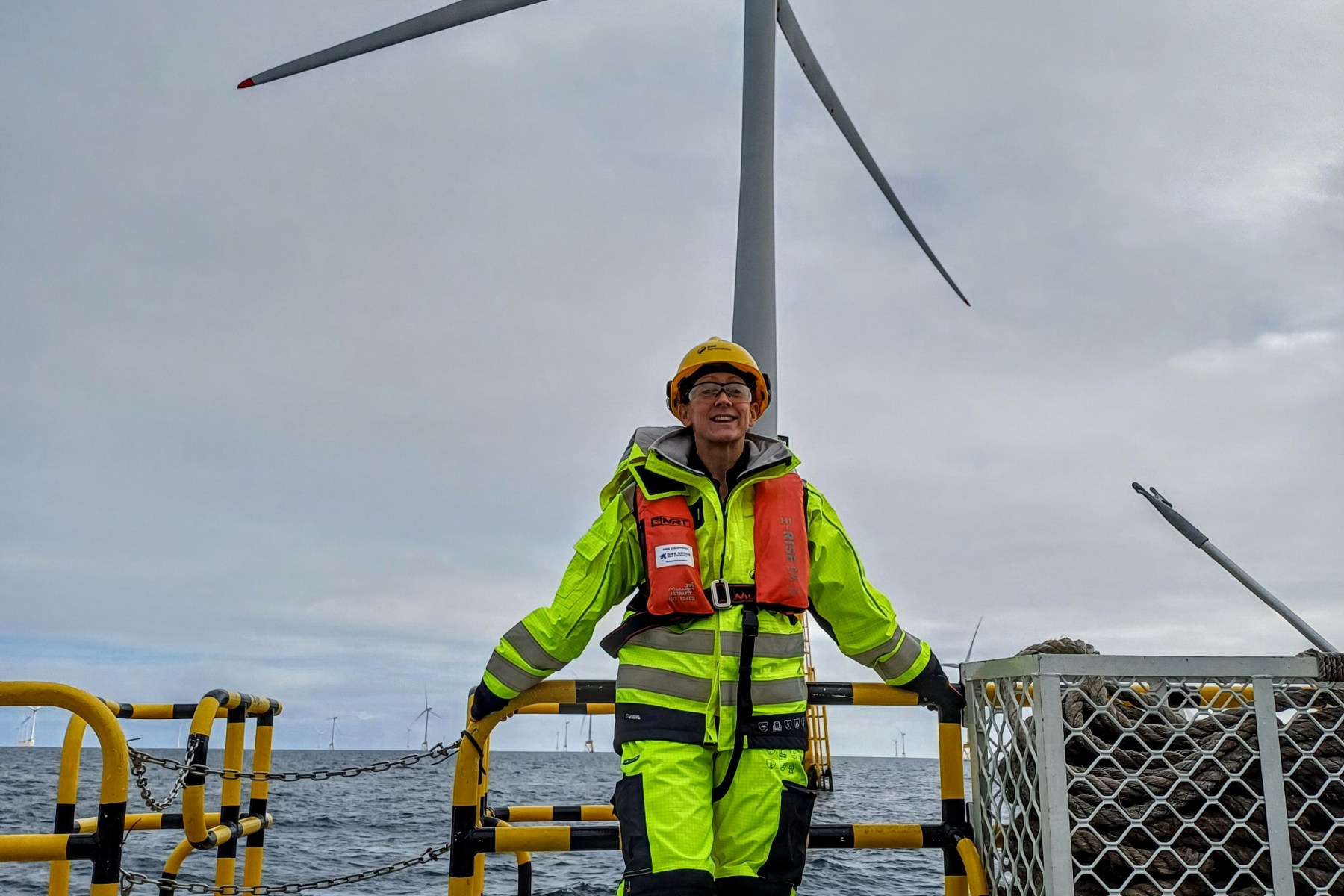
To help raise awareness of both careers in geophysics, and careers you might be able to have with a geophysics degree, BGA have collected profiles of people to share with school students, teachers, and university students.
Careers – Science and Research Sector
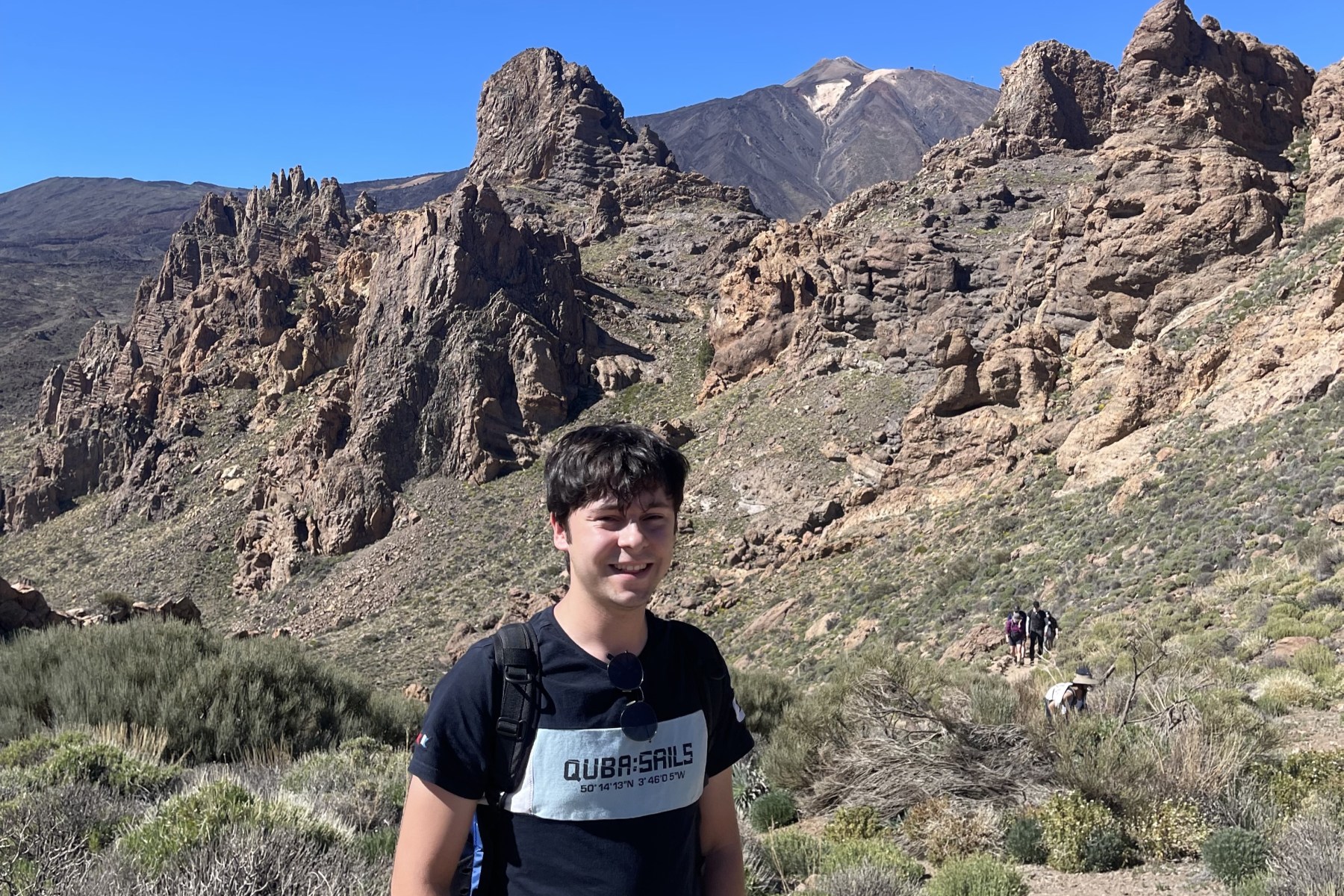
To help raise awareness of both careers in geophysics, and careers you might be able to have with a geophysics degree, BGA have collected profiles of people to share with school students, teachers, and university students.
Careers – Renewables Sector
To help raise awareness of both careers in geophysics, and careers you might be able to have with a geophysics degree, BGA have collected profiles of people to share with school students, teachers, and university students.
Careers – Oil and gas industry

To help raise awareness of both careers in geophysics, and careers you might be able to have with a geophysics degree, BGA have collected profiles of people to share with school students, teachers, and university students.
 The British Geophysical Association