 The British Geophysical Association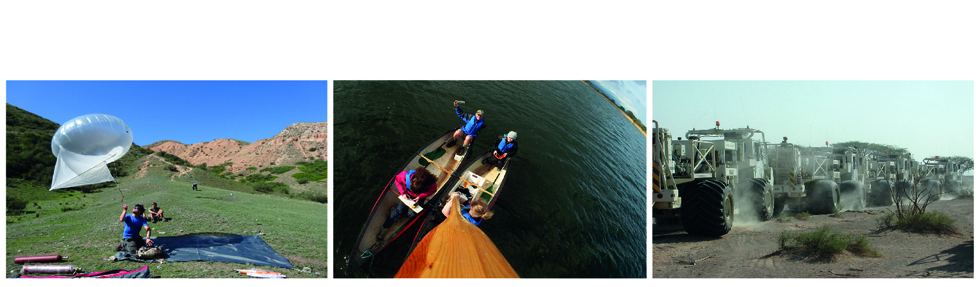
Guralp is recruiting

Guralp Systems Limited, who design and build seismometers for a range of academic, engineering and research applications, are looking to hire three candidates with a strong Earth Sciences background to work in their world headquarters close to Reading, UK. For more details, check out their poster.
What:
“The business will go through change over the next two years and we want to recruit a strong cadre of new leaders who will enter the business and help us shape the future. “
How much: £25-30K
Where:
Cumberland Lodge Scholarships 2015
The scholarship scheme is for doctoral students studying in the UK. Designed to fit around their university studies, the scholarship will involve students taking part in our conference programme. In doing so, they will receive training and gain experience in: communication and public engagement, working collaboratively across disciplines, and networking – as well as enjoy Cumberland Lodge’s excellent facilities.
Applicants must have the support of their university and be able to commit to a two year programme which involves spending six days at the Lodge each year. It is likely, therefore, that candidates will currently be first year doctoral students.
Further details and an application form can be found at www.cumberlandlodge.ac.uk/scholarships.

Scholarship Opportunity!

MSc structural geology scholarship for EU students
Where?
University of Leeds, School of Earth and Environment
When?
Apply right now!
What?
We have introduced a new scholarship of £5000 that is available for all EU students that want to take our 1-year MSc Structural Geology with Geophysics course http://www.see.leeds.ac.uk/msc-structure. The scholarship will contribute toward the course fee of £9000. The course is very popular with very high employment rates on completion of the programme, and places are filling fast, so please let your potentially interested (final year undergraduate) students know of this possibility – the deadline for applications for September 2015 entry is 28 Feb with scholarship interviews taking place 9 March (by Skype if necessary). Please note that we normally require at least UK 2:1 equivalent average UG marks in geology or geophysics for entry. The student does not need to have the English certificate at the time of application yet, but will need to present it later if accepted on the course.
I’ll be happy to answer any questions you or your students may have.
The scholarship will be in place for the next few years at least so please keep this in mind for future students too. We already accept applications for 2016 entry as well.


25 Most important events in Earth’s history
A really excellent and accessible summary from the BBC:
http://www.bbc.com/earth/bespoke/story/20150123-earths-25-biggest-turning-points/index.html
MATLAB Virtual Conference
WHERE? Online – participate from the comfort of your office!
WHEN? 25th March 2015

| The MATLAB Virtual Conference is a free, online event featuring live sessions on MATLAB and Simulink by experts from around the world.
Following my keynote address on the technologies driving change in the way engineers and scientists work, you can: |
|||||||||||||||
|
|||||||||||||||
| Register now to learn how you can get the most out of MATLAB and Simulink.
To learn more about what you can expect from the conference, watch these presentations from MATLAB Virtual Conference 2014. |
AGU prizes

The AGU has several awards for the communication of geophysics and serving the community, including two for excellence in science journalism and one for communicating climate science. The journalism awards are for “any medium except books” so TV and website articles as well as those in newspapers and magazines would be eligible.
The deadline is the 15th of March and any geophysicist can apply (including those from the UK). To find out more, check out their website.
I’m a Geoscientist, get me out of here!

I’m a geoscientist! is a free online event where school students get to meet and interact with geoscientists. It’s a free game-show-style competition between geoscientists, where the students are the judges.
Students challenge the geoscientists over fast-paced online test-based live chats. They ask the geoscientists all the questions they want, and vote for their favourite geoscientist to win €500 to communicate their work with the public.
I’m a Geoscientist is funded by the European Geosciences Union (EGU). All geoscientist members of the EGU can take part, as well as all teachers who have participated in EGU’s Geoscience Information For Teachers (GIFT) workshops.
The next I’m a Geoscientist zone will run from 9-20 March 2015.
If you are a geoscientist and you want to enthuse the next generation, why not apply. Fill in the online form for a chance to answer some amazing questions, as well as be in the running for €500!
PhD opportunities @UoDurham
The Earth Sciences department of Durham University, UK invites applications for >30 PhD projects across all Earth Science disciplines. Please see here for a list of detailed project descriptions. Funding for several studentships are available through a competitive process from:
– Durham Doctoral Studentship Awards (full awards open to outstanding candidates from the UK, EU and overseas, application deadline: Thursday, 15th January, 2015),
– NERC Oil/Gas CDT (full awards open to UK and EU residents, application deadline: Saturday 31st January 2015),
– NERC IAPETUS DTP (full awards open to UK residents, application deadline: Monday, 2nd February 2015).
Applications need to be submitted via our online application form. For more information, see http://www.dur.ac.uk/earth.sciences/postgraduate/.
 The British Geophysical Association